Will cleaning solar panels void the warranty?
The short answer is no. Cleaning done the right way won't void your warranty. Solar panels are built to sit outdoors for many years, and manufacturers generally expect owners to keep the glass reasonably clean as part of normal care. What can cause problems is the method. Warranties typically exclude damage caused by misuse, improper handling or unsuitable cleaning, so a panel scratched by an abrasive pad or cracked by someone standing on it may not be covered.
In other words, the real question isn't whether you clean your panels, but how. This guide covers what manuals typically recommend, which methods put your panels and your coverage at risk, and how to keep simple records that show your system has been looked after. It's general information, not legal advice, so always check your own warranty documents and installation manual for the terms that apply to you.
What do solar panel manuals say about cleaning?
Every brand writes its own installation and maintenance manual, and the details vary, so the only instructions that truly count for your system are the ones in your panel's documentation. Your installer should have handed these over, and many manufacturers publish manuals online, which you can find by searching the model number on the panel label. That said, the cleaning guidance in most manuals follows a similar pattern.
Why clean when the glass is cool? Spraying cold water onto hot glass creates a sudden temperature change that puts stress on the panel, and water evaporates quickly on hot surfaces, leaving residue behind. Some manuals also include electrical safety steps to follow before anyone works on the array, which is another good reason to read yours first.
- Use a soft brush, soft cloth or non-abrasive sponge on the glass
- Use clean water, ideally low in minerals, rather than cleaning chemicals
- Avoid abrasive pads, scrapers or anything that could scratch the glass or its coating
- Don't direct high-pressure water at the panels, frames or seals
- Clean when the glass is cool, such as early morning, not in the heat of the day
- Don't stand, walk, kneel or put weight on the panels
Which cleaning methods can damage solar panels and void the warranty?
Most cleaning damage happens with good intentions. Someone grabs whatever they use on the car or the windows and assumes it will be fine on solar glass. Unfortunately, the tools that work on a driveway or a windscreen can scratch coatings, force water past seals or leave a film that attracts even more dirt. These are the methods to avoid.
Micro-cracks deserve a special mention. They often can't be seen straight away, but over time they can spread and affect how the panel performs. If an inspection finds cracking consistent with someone standing or leaning on a panel, that's exactly the kind of damage a warranty is unlikely to cover.
- Pressure washers: high-pressure water can damage seals, junction boxes and frame edges, and many manuals advise against it
- Detergents and household glass cleaners: chemicals can leave residue and may harm anti-reflective coatings
- Abrasive scrubbers, steel wool or scouring pads: these leave fine scratches in the glass that can't be polished out
- Hard tap water left to dry: minerals leave white spots and streaks that build up with every clean
- Walking, kneeling or leaning on panels: pressure on the glass can cause micro-cracks invisible to the naked eye
What's the difference between a product warranty and a performance warranty?
Most solar panels come with two separate warranties, and it helps to know what each one is for. A product warranty covers defects in materials and workmanship, such as a faulty junction box, delamination or a frame that fails under normal conditions. It's about whether the panel itself was built properly.
A performance warranty is about output over time. Panels naturally produce a little less as they age, and a performance warranty sets out how much decline the manufacturer considers acceptable over the warranty period. If a panel falls below that, you may be able to make a claim. The length and terms of both warranties differ between brands, so check your own documents for the specifics.
This is where cleaning comes in. Both types of warranty usually exclude damage caused by improper handling or maintenance. And if you raise a performance concern, a manufacturer or installer may want to rule out simple causes first, such as heavy dirt build-up or new shading, before looking at the panel itself. A clean, well-documented array puts you in a much stronger position.
Is it safe to clean solar panels yourself?
The honest answer is that the panels might be fine, but you might not be. On most homes, solar panels sit on the roof, and reaching them means climbing a ladder and moving around on tiles or metal sheeting while carrying water and a brush. Wet roofs are slippery, tiles can crack or shift underfoot, and a fall from even a single-storey roof can cause serious injury.
Our advice is simple: don't go up on the roof. Cleaning panels safely at height needs a harness, proper height-safety gear and the experience to move around an array without putting weight on the glass. If your panels sit on a low frame you can reach without climbing, a gentle clean with a soft brush and clean water is fine. For anything on the roof, leave it to someone equipped for the job.
It's also worth remembering that panels generate electricity whenever there's daylight. If you notice cracked glass, scorch marks or exposed wiring, don't touch the panel or try to clean it. Contact your installer or a licensed electrician and have it checked before anything else is done.
What is the safe way to clean solar panels without damaging them?
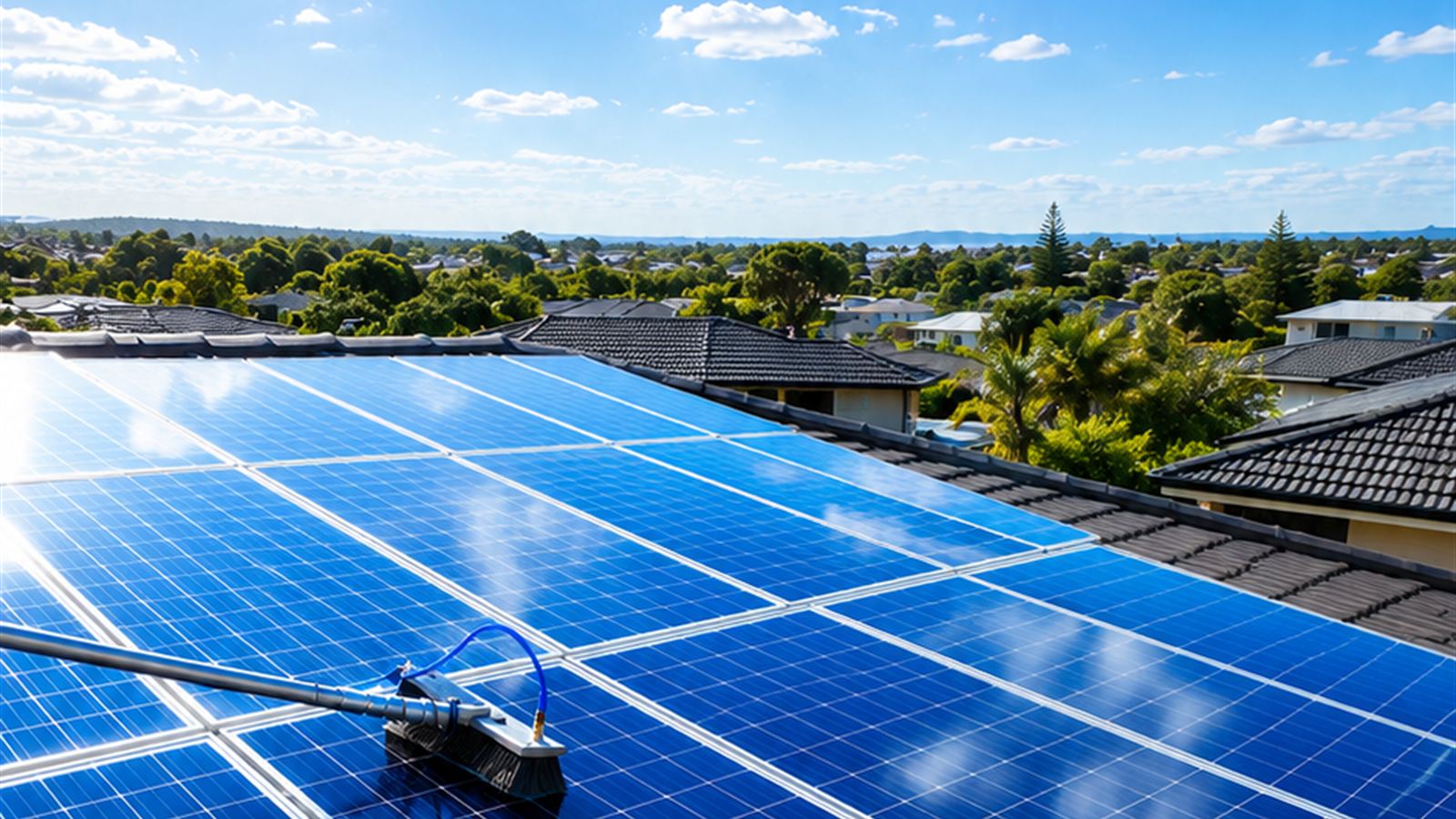
This is how Daniel cleans every array, and it lines up with the general guidance found in panel manuals. He goes up on the roof himself with a harness and height-safety gear, so he can reach every panel without stepping or leaning on the glass. The whole approach is designed to lift dirt off gently rather than blast or scrub it away.
Because pure water dries without residue, there's no film left behind to attract dust and no need for chemicals to get a clear finish. Pricing is fixed, includes GST and is the same for single or double storey homes, with no call-out fee: $140 for up to 6 panels, $150 for 12, $170 for 14, then $5 for each extra panel. If the array can't be reached safely, there's no charge.
- Deionised pure water, with the minerals removed, so nothing is left behind to spot the glass
- Soft brushes that loosen dust, pollen and bird droppings without scratching
- No detergents, soaps or household cleaners of any kind
- No pressure washing, so seals, frames and junction boxes aren't put at risk
- Glass dries clear, without spotting or streaks
Why should you keep records of solar panel cleaning?
If you ever need to make a warranty claim, being able to show that your panels have been cared for properly can only help. You don't need anything complicated. A simple folder, digital or paper, with dated photos and invoices gives you a clear maintenance history that's easy to hand to an installer or manufacturer if questions come up.
Every clean with Daniel includes before and after photos emailed to you the same day, along with your invoice. It takes the guesswork out of record-keeping, and if something ever goes wrong with a panel, you'll have dated evidence of its condition and of how it has been maintained.
- Before and after photos showing the condition of the glass
- Invoices listing the date and the cleaning method used
- Notes about any damage, loose parts or shading spotted during a clean
- Your original installation paperwork, warranty documents and panel manual
What does the free condition inspection check for?
While he's on the roof, Daniel carries out a free condition inspection as part of every clean. Problems on an array are hard to see from below, and spotting them early gives you time to contact your installer while an issue is small and, ideally, still covered. Anything he finds is photographed and flagged so you can see it for yourself.
The inspection isn't a substitute for an electrical check by your installer, but it gives you an honest look at parts of your system you'd otherwise never see. Daniel does every job himself, is fully insured and can usually fit you in the same week. Get a fixed price instantly online from your panel count, or call or text him on 0400 725 887.
- Cracked or chipped glass
- Lifted or damaged seals
- Loose mounting clamps
- New shading from growing trees or nearby structures
Frequently asked questions
Can I use a pressure washer on my solar panels?
It's best not to. High-pressure water can force its way past seals, damage junction boxes and stress the edges of the glass and frame. Many panel manuals advise against it, and damage caused by an unsuitable cleaning method may not be covered by your warranty. A soft brush and pure or clean water will remove everyday dirt without the risk.
Can I use Windex or dishwashing liquid on solar panels?
Household glass cleaners and detergents aren't recommended. They can leave a residue that attracts dust, may harm the anti-reflective coating on the glass, and could conflict with the cleaning instructions in your panel manual. Deionised pure water with a soft brush cleans effectively and dries clear, without needing any chemicals at all.
Does rain clean solar panels well enough?
Rain rinses off some loose dust, but it rarely shifts bird droppings, pollen or grime that has baked onto the glass. Rainwater can also leave behind a thin layer of dirt as it dries, especially on panels with a low tilt. If your panels look dull or patchy after rain, it's a good sign they're due for a proper clean.
Is it OK to hose solar panels with tap water?
Tap water isn't harmful in itself, but it contains minerals that leave white spots and streaks when it dries on the glass, and those marks build up over time. Hosing panels also usually means climbing onto the roof, which isn't safe for homeowners. Deionised water is used for professional cleans because it dries without spotting.
How often should solar panels be cleaned?
It depends on your home rather than a fixed rule. Nearby trees, bird activity, dust from roadworks or building sites, and a flatter panel tilt can all mean dirt builds up faster. Many homeowners book a clean once or twice a year. Your panel manual may also include maintenance guidance worth following, so check it alongside how the glass looks.